18 September 2026 · 7 min read
Breathing and knowing that we breathe
Most days we rush through thirty tasks before noon, holding our breath without noticing. You don't have to fix your posture, quiet your worries, or become peaceful. Just for this moment, let your body receive the air it has been waiting for, and let your shoulders drop.
A practice received from the Buddha
In his commentaries on the Ānāpānasati Sutta, the discourse on full awareness of breathing, Thich Nhat Hanh presents sixteen exercises. They move through awareness of body, feelings, mind, and the nature of experience. The familiar practice of following the breath is therefore an entrance to a path of concentration and insight, not only a way to relax.
The first exercise is deliberately plain. While breathing in, we recognise that we are breathing in; while breathing out, we recognise that we are breathing out. We do not improve the breath, make it deeper, or force it into a count. Awareness accompanies what the body is already doing.
Coming home to the body
For Thich Nhat Hanh, mindful breathing reunites mind and body. Attention may be planning tomorrow while the body remains here. Following one complete breath gathers these divided parts of experience into the same moment.
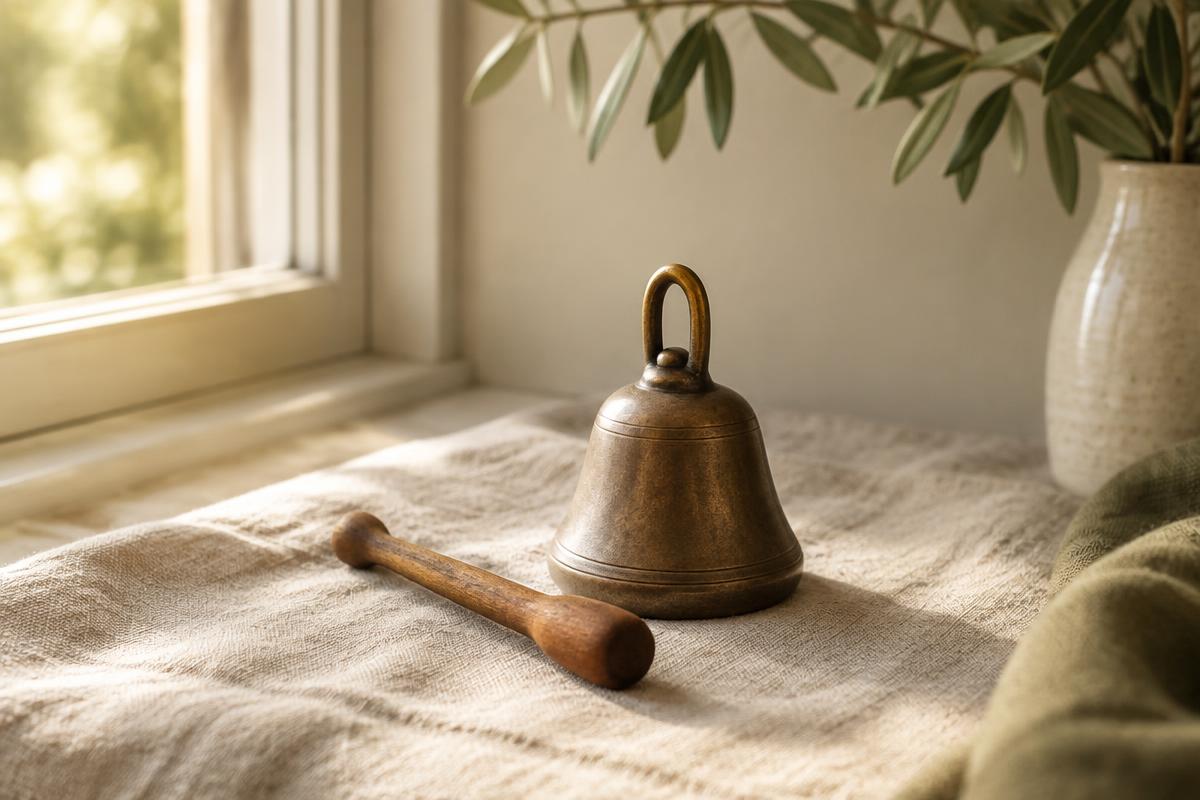
A bell is often used in Plum Village as an invitation to stop and breathe. At home, a kettle, a phone notification, or the closing of a door can serve in the same way. The sound is not an alarm that we have failed. It is simply another chance to return.
Practise without measuring
Some breaths will feel easeful and others tight or distracted. The exercise is the recognition, not the production of a special state. A few aware breaths repeated through the day can be more faithful to the teaching than one strained attempt to remain peaceful.
If attending to the breath feels uncomfortable, awareness can rest instead on the feet, hands, or sounds in the room. Mindfulness should not become another form of force.
Sources and further reading
- Thich Nhat Hanh, Breathe, You Are Alive: The Sutra on the Full Awareness of Breathing
- Thich Nhat Hanh, The Miracle of Mindfulness
- Plum Village, The Sutra on Mindful Breathing: Exercises 1–8