12 September 2026 · 6 min read
Arriving with each step
Notice how you crossed the room just now: rehearsing the next email, jaw clenched, hurrying toward a future that never quite arrives. The floor beneath you has been patiently holding you all along. You don't have to get anywhere right now. You are already here.
No appointment with the future
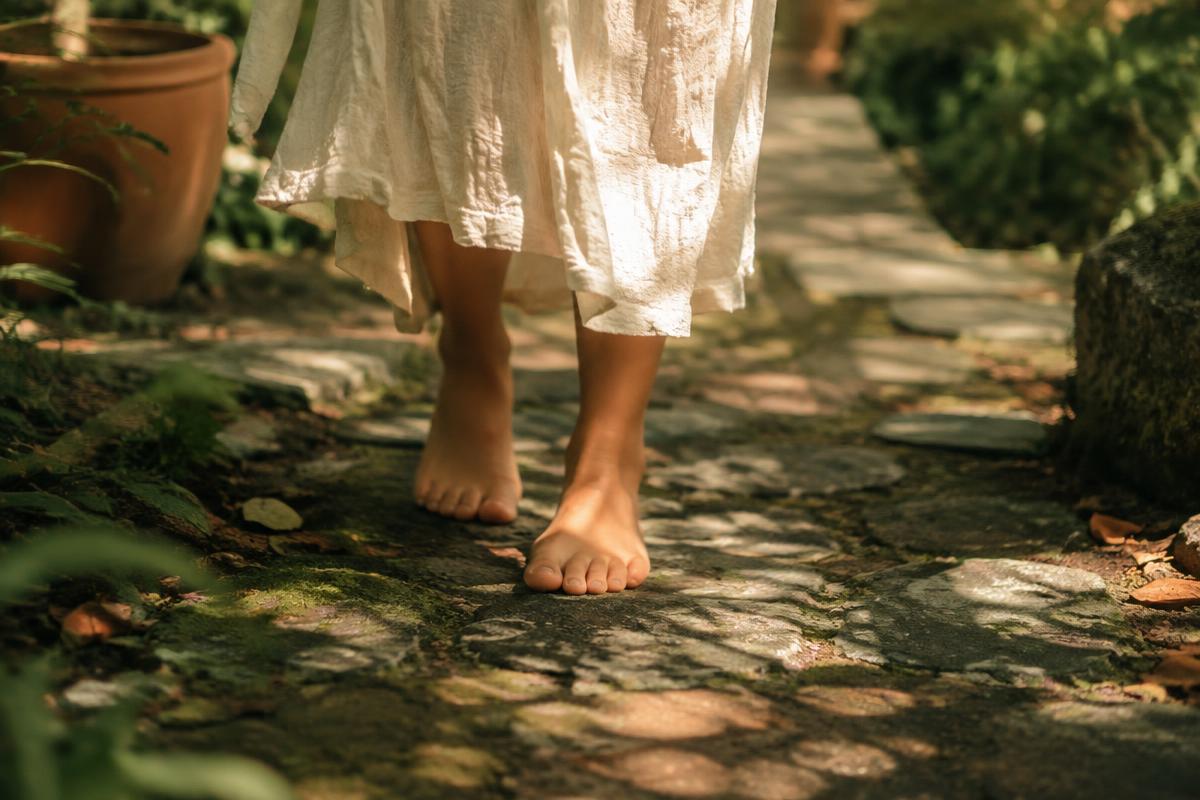
Thich Nhat Hanh taught walking meditation as the art of arriving in the here and now. The body is not carried along while the mind rehearses a later life. Each contact between foot and ground is enough to establish presence.
This does not require exaggerated slowness. Walk naturally and let breathing find its own relationship with the steps. Perhaps an in-breath accompanies two or three steps and an out-breath three or four. The numbers can change; awareness matters more than rhythm.
Touching the earth
Plum Village teachings describe mindful walking as touching or kissing the earth with the feet. The image brings gratitude into the practice. Pavement, corridor, garden, and station platform can all receive a careful step.
The well-known Plum Village gatha ‘I have arrived, I am home’ expresses the heart of the practice. It is not a promise that every problem has disappeared. It means that, for this step, we are no longer postponing our life.
Walking with the wider world
Formal walking is often practised in community, where a group moves without rushing toward a destination. Alone, we can retain that communal spirit by remembering that the ground supports countless lives and that our own pace affects those around us.
When planning takes over, feel the sole of one foot. There is no need to return to the beginning of the path. The next step is already a new beginning.
Sources and further reading
- Thich Nhat Hanh, The Long Road Turns to Joy
- Plum Village, An Introduction to Walking Meditation
- Plum Village, The Art of Mindful Walking